
Mount Hua history in short
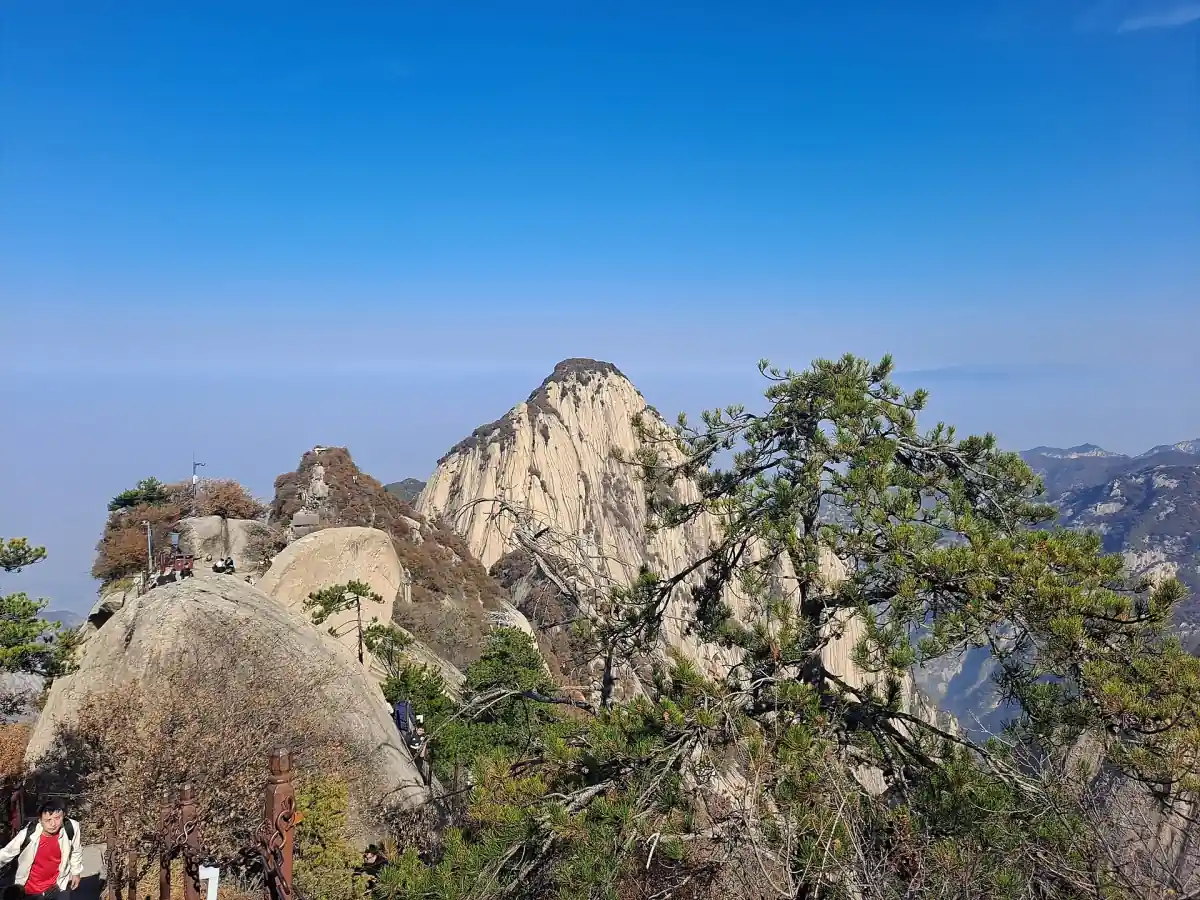
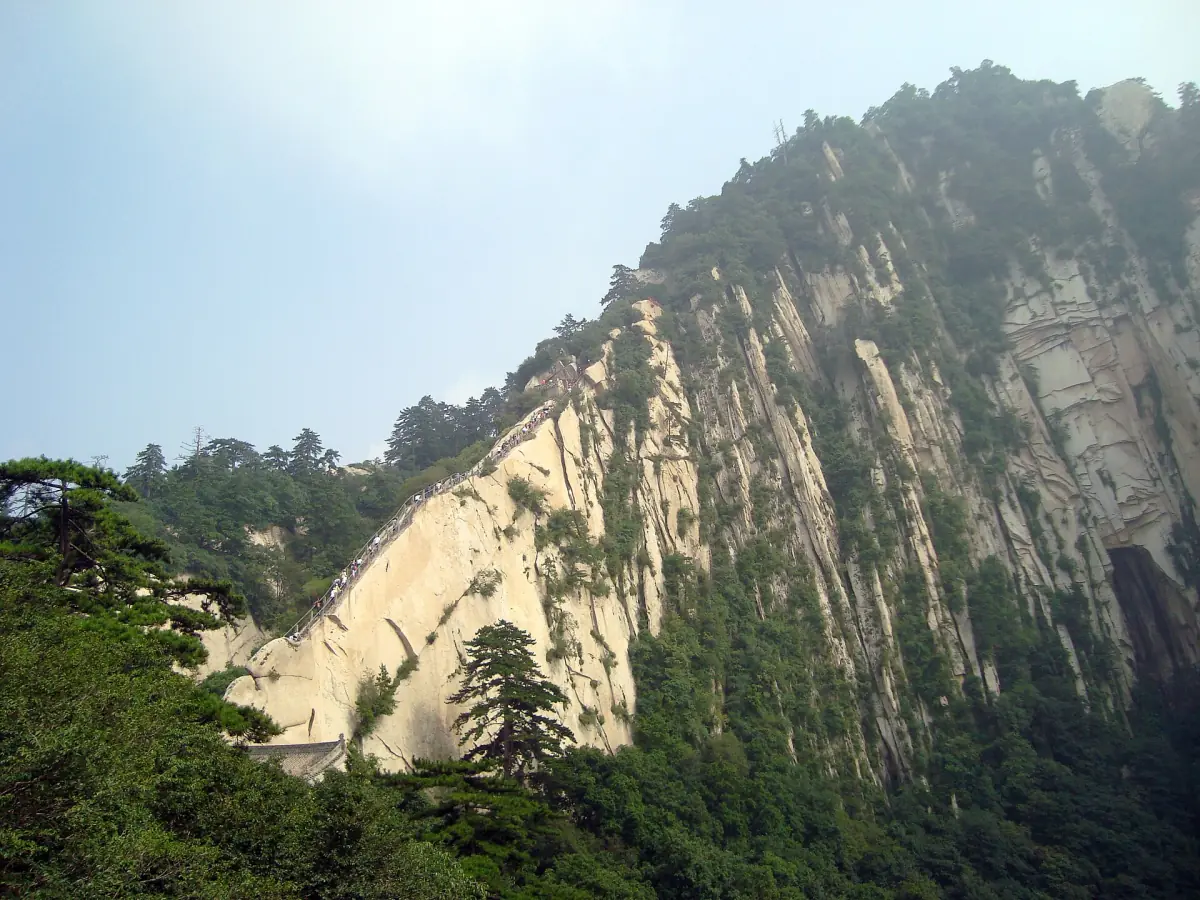
Huashan is the Xiyue, the western member of the Five Great Mountains of China, and it belongs to the Qinling range. It rises south of Huayin in Weinan, Shaanxi. The ministry of culture and tourism describes it as a granite mountain with five main peaks, and rates it a national 5A scenic area since 2011.
Over the centuries it became a place of Taoist practice, with temples at the foot and in the mountain area, and with rock inscriptions in many calligraphy styles. This page sorts what is documented from what is legend, so you know what you are looking at when you walk the trail.
Our pick: a private guided visit
A private tour with an English-speaking guide, lunch and entry tickets for a day at Mount Hua.
Hand-picked tours, booked through GetYourGuide. Prices are indicative starting prices in US dollars (as of October 2026). Tap a tour for live availability and the current price in your currency.
Mount Hua tours from Xi'an
Guided visits to Huashan, from a single day to multi-day trips that add other sights. Read the inclusions on each listing before you book.
Xiyue, the Western of the Five Great Mountains
The mountain's place in the sacred geography of China.
An official local description names Huashan as the western mountain among the five great mountains, linked to the Qinling range. The five peaks are the South Peak (Luoyan), the East Peak (Chaoyang), the West Peak (Lianhua), the North Peak (Yuntai) and the Central Peak (Yunü). You can read how they differ on the peaks page.
Protection rests on a provincial regulation for the scenic area. It is not a national park and it is not a UNESCO site, and no World Heritage listing should be assumed.
Quanzhen Taoism, Yuquan Yuan and Zhenyue Gong
Two temples that anchor the Taoist side of the mountain.
The ministry calls Huashan an important place of the Quanzhen tradition and names Yuquan Yuan and Zhenyue Gong as nationally significant Taoist temples. Yuquan Yuan stands at the foot and is where the classic hiking route starts. Its hours in June 2026 were 08:00 to 17:00 with free entry, so check on arrival.
If you walk up from Yuquan Yuan, you pass through the historical core of the mountain. The route is described on the hiking page.
Chen Tuan
A hermit tied to the mountain.
An official local description links the Taoist hermit Chen Tuan with the mountain, the Yuntai area and Yuquan Yuan. We leave out the miraculous claims that popular stories add and stick to the connection with the place.
Xiyue Temple at the foot
The temple for the deity of the mountain.
Xiyue Temple stands at the base of Huashan and was built for the worship of the mountain's deity. Its origins go back to the Western Han period, with no exact founding year. Free reservation was tied to a promotion that ran until 10 October 2026, so do not assume entry is free for good. Hours also differ by season, and the hours were 07:00 to 19:00 for March to November.
More than 640 rock inscriptions
Calligraphy cut into the mountain itself.
The ministry describes more than 640 surviving rock inscriptions in different Chinese script styles. That is the ministry's description and not a current count. Rules for the scenic area forbid damaging plants and inscriptions, so look and photograph but do not touch or mark them.
Legends of Huashan
Stories attached to the peaks, told as stories.
The ministry links the West Peak to the legend of Chenxiang, who saves his mother. Local descriptions also record the legends of Juling, who splits the mountain, and of a flute melody that lures a phoenix. These are tales and not historical events, and nothing about the geology of the mountain follows from them. They give the peaks a story, which is why guides like to tell them.
5A scenic area since 2011
What the rating does and does not mean.
The 5A rating from 2011 is a Chinese tourism classification. It says the site meets the national top grade for scenic areas, and it is separate from any UNESCO title. For what a visit involves today, see tickets, and the best time to visit.
Mount Hua history: frequently asked questions
Why is Huashan called Xiyue?
Xiyue means the western peak. Huashan is the western member of the Five Great Mountains of China.
Is Mount Hua a UNESCO World Heritage site?
No title of that kind should be assumed. It is a national 5A scenic area, rated in 2011, with its own provincial protection regulation.
Are the stories about Chenxiang and Juling true?
They are legends. The ministry and local descriptions record them as tales tied to the peaks, not as historical events.
Can I see the rock inscriptions?
The ministry describes more than 640 of them on the mountain. Look and photograph, but do not touch or damage them.
Is mount-hua.org the official Huashan website?
No. This is an independent travel guide with no connection to the scenic area, the cable car operator or the city administration.